
Some breakouts are less about having the wrong product and more about treating the wrong condition. Malassezia folliculitis can mimic acne almost perfectly, but the triggers and the fixes are different—and that’s why so many people stay stuck for months. I’m going to break down what it is, how to spot it, and how to choose antifungal options the way you would choose any OTC treatment: based on what the organism responds to and what your skin can realistically tolerate.
This content is educational in nature and should not be used as a substitute for individualized medical advice.
Shop This post






This post may contain affiliate links. This means I may earn a small commission if you purchase a product through my link at no extra cost to you. All items are carefully curated by me and reflect my honest opinion.
Understanding Malassezia Folliculitis (Fungal Acne)
- Folliculitis = inflammation of a hair follicle.
- Malassezia = a lipophilic (lipid-loving) yeast that is part of normal skin flora.
- In Malassezia folliculitis, the yeast overgrows within follicles and triggers itchy papules and pustules (small raised bumps and pus-filled bumps).
Why the term fungal acne sticks
It resembles acne, and it often shows up on acne-prone zones (forehead/hairline, chest, back). However, because it’s yeast-driven, typical acne strategies (especially antibiotics) often underperform—or make it worse—while antifungals work noticeably faster.
What Causes Malassezia Folliculitis
The yeast itself isn’t new—you already have it. The issue is the environment.
Dermatology sources consistently list these risk factors:
- Heat + humidity
- Heavy sweating (hyperhidrosis)
- High sebum/oily skin
- Occlusion (thick emollients, heavy sunscreen layers, tight clothing, greasy hair products on skin)
- Antibiotic use (especially when prolonged)
- Immunosuppression (including topical/oral corticosteroids)
Malassezia biology matters here: these yeasts are lipid-dependent (they rely on external lipids), which helps explain why they prefer sebum-rich areas like face/scalp/chest/back.
If your breakout started during or after a long course of antibiotics (or if you’re frequently using topical steroids), that’s worth noting—both are recognized risk factors for Malassezia folliculitis. Don’t stop a prescribed medication on your own, but consider messaging your prescriber if the timing matches a new, itchy, uniform rash.
How To Tell You Have It (And How It Differs From Acne)
No single sign is perfect, but this cluster is common:
1) The bumps are monomorphic
Monomorphic means the bumps look very similar in size and shape. Look for clusters of small, similar papules/pustules. Acne vulgaris usually looks more mixed (blackheads, whiteheads, papules, cysts).
2) It often itches
Itch is a big clue. Acne can be tender or sore, but itch is more typical with Malassezia folliculitis.
3) No comedones
Comedones are blackheads and whiteheads. Their absence strongly points away from classic acne vulgaris.
4) Location: hairline, forehead, upper back/chest
These are common sites because they’re more lipid-rich and sweat/occlusion-prone.
5) It flares with sweat and occlusion
Gym days, helmets/hats, tight synthetic clothing, hot weather, and leaving conditioner on your back can all be noticeable triggers.
What actually confirms it
A clinician can confirm with KOH prep, microscopy/stains, and sometimes biopsy—especially when bacterial folliculitis, steroid acne, or acneiform drug eruptions are in the mix.

Common Fungal Acne Skincare Mistakes
- Doubling down on antibiotics (topical or oral)
- Antibiotics may reduce acne inflammation, but they can also disrupt microbial balance and are frequently linked with Malassezia overgrowth patterns. If you’ve been on long courses and your bumps got more uniform/itchy, this matters.
- Over-exfoliating
- Harsh acids + frequent exfoliation can impair barrier function, increase irritation, and keep the cycle going. You want controlled, targeted treatment—then barrier support.
- Using thick, lipid-rich leave-ons
- Occlusive emollients and heavy sunscreens are recognized triggers for some people with Malassezia folliculitis.
- Treating the face but ignoring the scalp
- The scalp is a major Malassezia reservoir. If you have dandruff, scalp itching, or flaking, it can maintain facial/hairline issues unless treated too.
- Stopping antifungals the moment it clears
- Malassezia folliculitis commonly recurs. A maintenance approach is often the best way to achieve long-term control.
- Escalating acne actives instead of switching to antifungals
- Malassezia folliculitis often persists for years when treated like acne.
Product Recommendations + A Routine That Fits Fungal Acne
Below is a routine built around what Malassezia folliculitis responds to best: topical antifungal therapy + sweat/occlusion control + barrier support.
Step 1: Cleanser (daily, gentle)
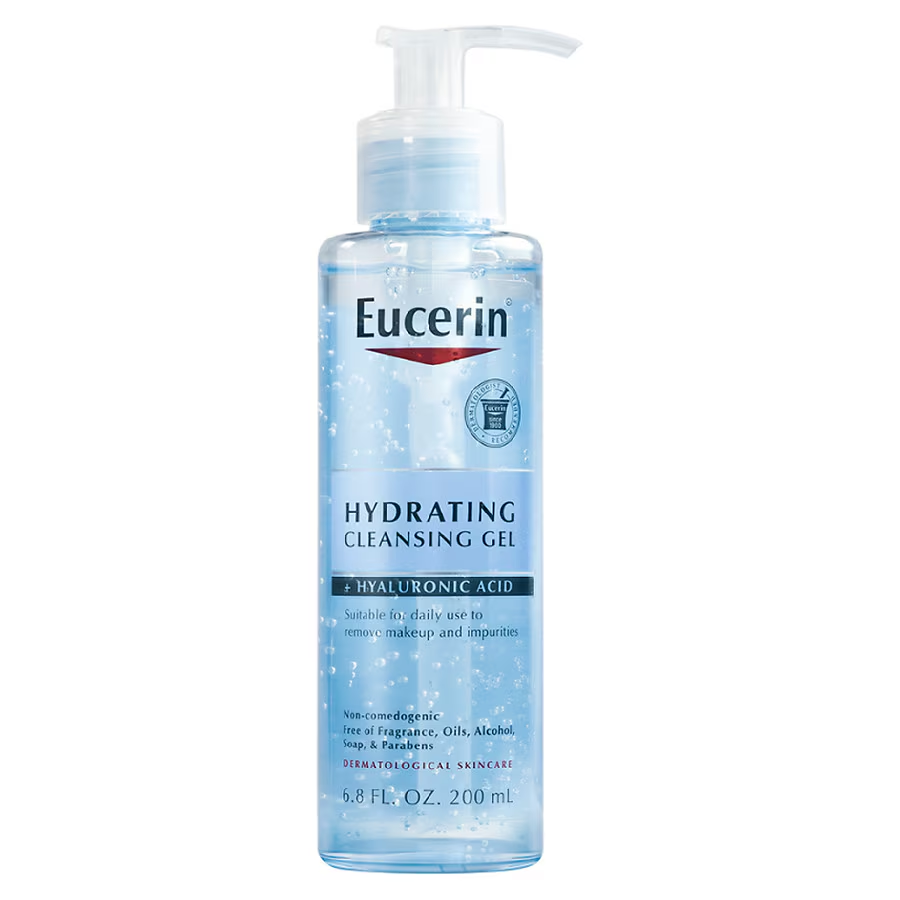
Eucerin Hydrating Cleansing Gel (Hyaluronic Acid)
A low-lather gel cleanser built around gentle surfactants and humectants, designed to rinse clean without a moisturized “film” feeling. Ingredient-wise, it’s the kind of simple, water-based formula that tends to play nicely with Malassezia-prone routines because it avoids rich oils/butters and focuses on straightforward cleansing + hydration support. Best for normal-to-combination (and even dehydration-prone) skin that still needs a clean rinse after sunscreen and sweat.
EltaMD Foaming Facial Cleanser
This is a strong pick for fungal-acne-prone skin because it cleans thoroughly (helpful for sweat/occlusion zones) without relying on rich emollients that can linger on the skin. Best for combination-to-oily, and especially good if you’re cleansing after workouts or wearing water-resistant sunscreen.

Bioderma Sensibio Foaming Gel
A low-irritant foaming cleanser built around Bioderma’s micellar technology, designed to remove sweat, sunscreen, and surface oil without leaving a residue that can worsen Malassezia-prone skin. The formula is fragrance-free, rinses very cleanly, and is less likely to sting when your barrier is already reactive from antifungal treatments. Best suited for sensitive, combination, or oily skin, including face and acne-prone body areas like the chest and back. Expect a light foam and a neutral, non-tight finish that layers well with antifungal routines.

Geek & Gorgeous Jelly Joker
A low-pH jelly cleanser that’s designed to be barrier-respecting while still removing daily buildup. It’s a good “supporting cleanser” for fungal-acne routines because it doesn’t lean on heavy oils/butters and it’s built to rinse without leaving a rich coating behind. Best for normal-to-dry (or easily-irritated) skin that still wants a thorough cleanse before treatments.

Step 2: Antifungal Short-Contact Wash (Face or Body) — Pick 1
Use this like a “treatment cleanser”: apply to affected areas, leave on for a short duration, then rinse.
Nizoral A-D (ketoconazole 1% shampoo)
- Can be used on scalp, face, and body as a short-contact antifungal cleanser.
- Face: 2–3 nights/week to start. Massage a small amount over affected areas (avoid eyelids and corners of nose if you sting easily), leave 2–3 minutes, rinse well, then moisturize. Taper to 1-2 nights/week for maintenance.
- Body (chest/back): 3–4x/week for 2–3 weeks. Lather over affected areas, leave 5 minutes, rinse thoroughly.

Head & Shoulders Clinical Strength (selenium sulfide 1%)
- Best for scalp and body; face use is optional and depends on tolerance (selenium sulfide is effective against Malassezia but can be drying or irritating on facial skin).
- Scalp: Use 2–3x/week (or as needed). Massage into the scalp (focus on flaky/itchy areas), leave 2–3 minutes, then rinse thoroughly.
- Face (if you tolerate it): 1–2x/week. Lather in hands first, apply the foam to affected areas (avoid eyelids and lips), leave 60–90 seconds for the first few uses, then rinse well and moisturize. Increase contact time only if you’re not getting stinging or tightness.
- Body: 2–4x/week. Lather over chest/back/shoulders, leave 5 minutes (up to 10 minutes if well-tolerated), then rinse well. This is especially useful for sweat- and heat-triggered trunk flares.

Selsun Blue Medicated Maximum Strength (selenium sulfide)
- Another selenium sulfide option if you prefer this brand or tolerate it better. Mechanistically it sits in the same bucket as Head & Shoulders: reduce Malassezia load with short-contact use.
- Best for scalp and body; face use is optional and depends on tolerance.
- Face (if you tolerate it): 1–2x/week. Apply a thin layer, leave 60–90 seconds the first few uses, rinse well. Increase contact time only if you are not getting dryness/stinging.
- Body: 2–4x/week. Lather, leave 5–10 minutes, rinse well. Great for warm-weather trunk flares.

Vanicream Z-Bar (pyrithione zinc bar)
- Mostly a body/scalp-adjacent option; face only if your skin is very tolerant (bar cleansers can be drying).
- Face (optional): 1–2x/week max, quick lather, 30–60 seconds, rinse.
- Body: daily or every other day as a cleanser for chest/back, especially for maintenance.

Step 3: Leave-On Antifungal (Spot-Treat) — Pick 1
Apply a thin layer to affected zones once daily for 2–3 weeks (or per label/clinician advice). Avoid the eye area.
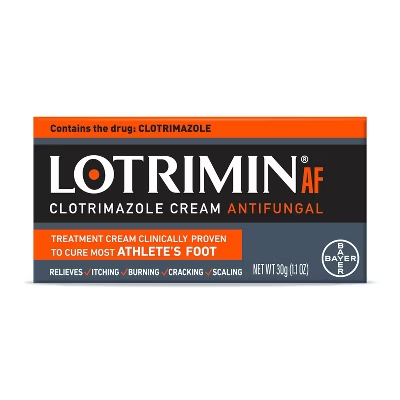
Lotrimin AF (clotrimazole 1% cream)
A straightforward OTC azole antifungal; clotrimazole has activity against yeasts and is commonly used on skin fungal infections. This is a practical “leave-on” option when washes alone don’t fully clear follicular bumps. Best suited for smaller areas (forehead/hairline, chest patch, clusters). Expect a standard cream texture; use a thin layer to reduce heaviness. If you’re easily irritated, start every other night for a few days and build up.

Miconazole nitrate 2% cream
Another OTC azole option with similar “leave-on” logic when Malassezia folliculitis is suspected. Best suited for body areas and thicker skin where creams are tolerated. Expect a conventional cream finish; keep layers thin. If you get stinging or redness, pause and switch to wash-only for a few days.

Note: Don’t get hung up on the “athlete’s foot” label—what matters is the active ingredient, and azole antifungals are commonly used on skin yeast issues in many body areas (used as directed and kept out of eyes/mucosa).
Step 4 — Moisturize (Low-Lipid Hydration That Complements Your Antifungal Plan)
Think: water-based, humectant-forward, no heavy oils.
PURITO Oat In Calming Gel Cream
A water-gel moisturizer with oat seed water + glycerin + squalane + panthenol—a nice “calm + hydrate” combination when bumps are itchy and your barrier is irritated. Best for normal-to-oily and sensitive skin. Finish is light, non-sticky.

Dr. G R.E.D Blemish Clear Soothing Cream
A lightweight gel-cream built around humectants + silicones (rather than classic fatty cream bases), with niacinamide + panthenol + centella. Ingredient-wise, it avoids the usual long-chain fatty acid “cream backbone,” and is marked fragrance & essential oil–free. Best for redness-prone, acne-prone skin that still needs comfortable moisture. Finish is smooth, non-greasy, and plays nicely with sunscreen.

Geek & Gorgeous Hydration Station
A gel-cream centered on hydration + calming: glycerin + ectoin, with supportive soothing ingredients. Best for dehydrated-oily skin that needs moisture but hates rich creams. Expect a light gel-cream finish that doesn’t feel waxy or buttery.

Isntree Hyaluronic Acid Aqua Gel Cream
A lightweight gel-cream that focuses on humectant hydration (water-binding ingredients) rather than rich oils. It’s useful when ketoconazole/selenium washes dry you out but you still want a breathable finish. Best suited for dehydrated-oily or combination skin that needs hydration without heaviness. Expect a cooling gel texture and quick absorption.

Bioderma Atoderm Intensive Gel-Crème
A humectant-forward gel-cream that’s designed to relieve dryness without the heavy, buttery feel that can make Malassezia-prone skin feel more congested. The texture spreads easily over larger areas (chest/back included) and dries down to a comfortable, flexible layer—helpful when antifungal washes are leaving you tight or flaky. Best suited for dry, sensitized, treatment-dried skin that still needs a lightweight finish.

La Roche-Posay Cicaplast Gel B5
This is a smart “dry skin + fungal acne” compromise because it’s strongly glycerin + panthenol focused and forms a protective, non-greasy cushion. Best for irritated, over-cleansed, or treatment-dried skin—especially if you’re doing short-contact antifungal washes. Finish is a protective gel film (not oily), which makes it great as the last step at night or on the areas that flake.

Step 5: Sunscreen
For Malassezia-prone skin, look for lighter, more breathable textures and avoid the heaviest balm-like formulas during a flare.
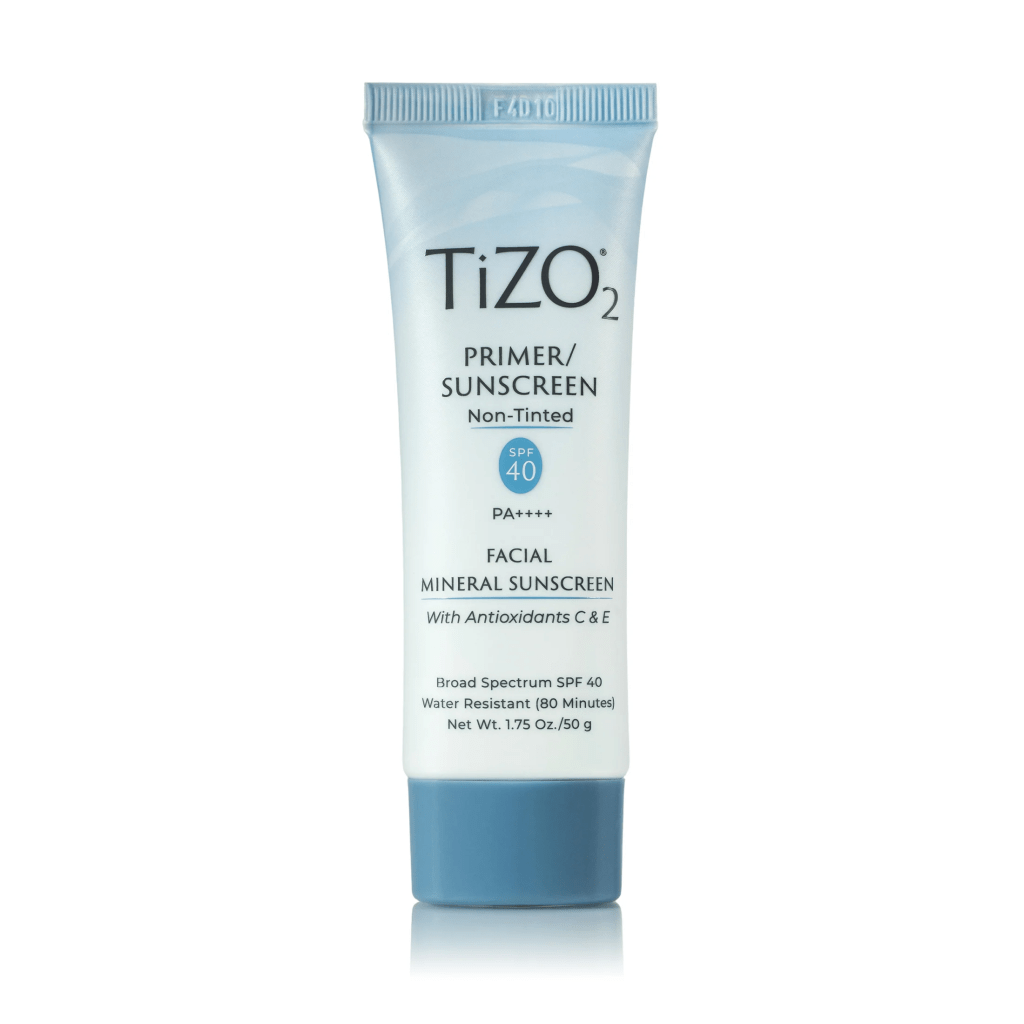
TiZO2 Facial Mineral Sunscreen & Primer SPF 40 (Non-Tinted)
A silicone-forward mineral sunscreen + primer hybrid that wears exceptionally light and sets to a sheer, matte finish—a nice fit when Malassezia folliculitis flares with heavier, oilier layers. It uses titanium dioxide (8%) + zinc oxide (3.8%) for broad-spectrum protection, and the base is primarily volatile silicones + dimethicone crosspolymers, which helps it feel smooth, “blurring,” and less occlusive than many cream sunscreens. It’s designed to function as a standalone SPF or as a primer under makeup. Best suited for oily/combination skin, humid climates, or anyone who wants a primer-like sunscreen that won’t add a greasy film during a fungal acne-prone phase.

CoTZ Sensitive SPF 40 (Non-Tinted)
A gentle 100% mineral sunscreen built around 20% zinc oxide for broad-spectrum protection. It’s a strong pick for fungal acne–prone, reactive, or treatment-dried skin because it’s designed to be fragrance-free and oil-free and wears like a lightweight lotion that blends translucent rather than greasy. Best for daily face or body use when you want a comfortable finish that doesn’t feel overly occlusive during a Malassezia-prone phase.

Skin Aqua UV Super Moisture Gel SPF50+ PA++++
A lightweight Japanese sunscreen gel that spreads quickly and dries down without a heavy, greasy film—often a good match for fungal acne–prone skin that flares with richer creams. It uses multiple modern UV filters for high protection and is formulated with humectants like hyaluronic acid for a more comfortable wear during drying antifungal routines. The finish is “watery gel” and easy to reapply, which helps with consistency on face and trunk.

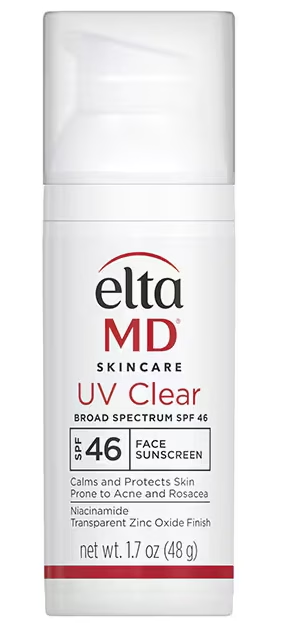
EltaMD UV Clear SPF 46
A very common dermatologist pick for acne-prone and redness-prone skin; lightweight feel, layers well, and many Malassezia-prone folks tolerate it when heavier SPFs trigger bumps.
Clinically Backed Treatments Beyond OTC
Evidence is strongest for antifungals—topical and oral—used in a targeted way.
- Topical prescription antifungals: ketoconazole 2% cream, ciclopirox, etc.
- Oral antifungals (often for widespread, recurrent, or stubborn cases): itraconazole/fluconazole is often used for extensive cases, but medication interactions and liver considerations are a big part of safe prescribing—bring a full med list to your provider if you’re escalating treatment.
- Confirming the diagnosis when treatment fails: microscopy/KOH or biopsy to rule out bacterial folliculitis, acneiform eruptions, or steroid acne.
Key Takeaways
References
[1] Rubenstein RM, Malerich SA. Malassezia (Pityrosporum) Folliculitis. Journal of Clinical and Aesthetic Dermatology. 2014.
[2] DermNet NZ. Malassezia (pityrosporum) folliculitis. DermNet.
[3] Saunte DML, Gaitanis G, Hay RJ. Malassezia-Associated Skin Diseases, the Use of Diagnostics and Treatment. Frontiers in Cellular and Infection Microbiology. 2020.
[4] Prohic A, Jovovic Sadikovic T, Krupalija-Fazlic M, Kuskunovic-Vlahovljak S. Seborrheic Dermatitis and Malassezia species: How Are They Related? Medical Archives. 2016 (via PMC record).
[5] American Academy of Dermatology (AAD). Acne clinical guideline (highlights). AAD.


