
Stinging products, surprise redness, flaky patches, and that “my moisturizer isn’t doing anything” tightness are classic signs your skin barrier needs a reset. If you’ve been using acids, scrubs, retinoids, or multiple actives at once, your skin may simply be overworked. In this guide, I’ll walk you through a simple barrier-repair plan—what to stop, what to keep, and the products that tend to be the most tolerable when skin is reactive.
This post is general education—not personal medical advice. If your skin is severely painful, swollen, oozing/crusting, or not improving, it’s worth checking in with a dermatologist.
Shop This post





This post may contain affiliate links. This means I may earn a small commission if you purchase a product through my link at no extra cost to you. All items are carefully curated by me and reflect my honest opinion.
Product recommendations
1) Gentle cleansers (keep it boring on purpose)
- Vanicream Gentle Facial Cleanser — Very simple, low-irritant cleanser that removes grime without that “squeaky clean” barrier-stripping feel.
- Good for: very sensitive, reactive, over-exfoliated skin; dry to normal skin.
- CeraVe Hydrating Facial Cleanser — Lotion-like cleanser with ceramides + humectants that cleanses without leaving skin tight.
- Good for: dry, dehydrated, or eczema-prone facial skin.
- KraveBeauty Matcha Hemp Hydrating Cleanser — Gel cleanser built around a “don’t strip the barrier” philosophy.
- Good for: sensitive skin that still wants a clean-rinsing gel texture.
2) Barrier-repair moisturizers (your “daily driver”)
- CeraVe Moisturizing Cream — Classic ceramide-based cream that’s reliable for face or body when your barrier is stressed.
- Good for: dry/sensitive skin, post-exfoliation irritation, body flares.
- Vanicream Moisturizing Cream — Minimalist, fragrance-free, made for people who react to “extra” ingredients.
- Good for: extremely sensitive, allergy-prone, eczema-prone skin.
- Bioderma Atoderm Intensive Balm — Rich moisturizer for very dry, atopic-leaning skin; great when standard creams aren’t enough.
- Good for: very dry, itchy, irritated, eczema-prone skin.
- Etude SoonJung 2x Intensive Cream — Panthenol + soothing ingredients in a low-irritant formula that plays nicely with reactive skin.
- Good for: sensitive skin that wants a lighter-but-still-repairing cream.
- CeraVe PM Facial Moisturizing Lotion — Lightweight, oil-free lotion with niacinamide (often helpful for barrier support) when you can’t tolerate heavy creams.
- Good for: combo/oily but sensitive skin; barrier repair without greasiness.
3) Soothing “rescue” options (when you’re red, raw, or flaky)
- La Roche-Posay Cicaplast Baume B5 — A comforting balm texture with a skin-protectant feel (great on windburned, irritated patches).
- Good for: compromised areas, around the nose/mouth.
- Avène Tolérance Control Soothing Skin Recovery Cream — A minimalist, fragrance-free + preservative-free “reactive skin” moisturizer designed to calm burning/tingling/tightness and support barrier recovery.
- Good for: hypersensitive, over-exfoliated skin; redness + tightness; face/neck.
4) Occlusives (the “seal it in” step at night)
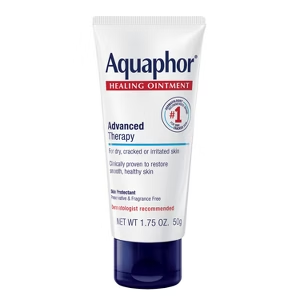
- Aquaphor Healing Ointment — Petrolatum-based ointment to reduce water loss and protect irritated spots.
- Good for: flaky corners of nose/mouth, chapped areas, “hot spots.”
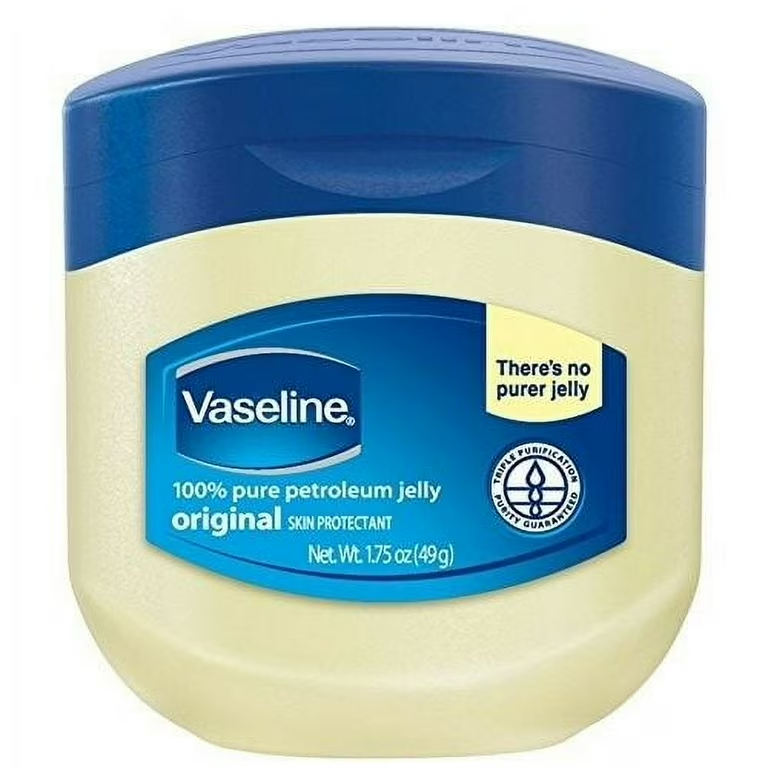
- Vaseline (100% petrolatum) — Simple, inexpensive, and highly effective as a final layer over moisturizer.
- Good for: ultra-sensitive skin that can’t tolerate many ingredients.
5) Sunscreen (non-negotiable during barrier repair)
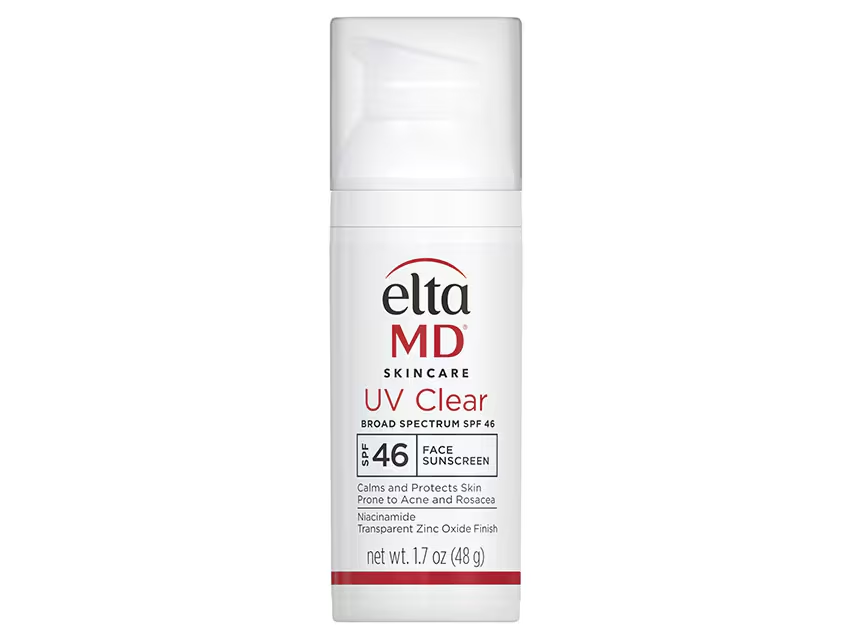
- EltaMD UV Clear SPF 46 — Zinc oxide-based daily sunscreen that’s popular for sensitive/acne-prone skin and helps protect your healing barrier from UV stress.
- Good for: acne-prone + sensitive skin; post-exfoliation recovery.
What is the skin barrier, really?
Think of the outermost layer of skin (the stratum corneum) like a brick wall:
- “Bricks” = flattened dead skin cells (corneocytes)
- “Mortar” = lipids (fats) that fill the spaces between cells—especially ceramides, cholesterol, and fatty acids
When this wall is strong, it:
- keeps water in (lower transepidermal water loss / TEWL)
- keeps irritants and allergens out
- supports a calmer, more stable skin environment
When you over-exfoliate or irritate it, those “mortar” lipids get disrupted, TEWL rises, and suddenly everything feels spicy.
Signs your barrier is compromised (especially from over-exfoliation)
Common clues:
- stinging/burning from basic products (even “gentle” ones)
- tightness after washing
- redness, rough patches, flaking
- makeup clinging to dry spots
- breakouts and dryness at the same time (yep, it happens)
Over-exfoliation is a frequent trigger because acids/retinoids can outpace your skin’s ability to rebuild the barrier when used too often or layered aggressively.
The Barrier-Repair Plan
Step 1: Pause the “actives” for 7–14 days
Put these on timeout:
- AHAs/BHAs/peels, scrubs, cleansing brushes
- retinoids/retinol
- benzoyl peroxide (if it stings right now)
- strong vitamin C (L-ascorbic acid), astringents, alcohol-heavy toners
- fragranced products and essential oils (common irritants)
If your skin is truly raw, even skipping cleanser in the morning can help.
Step 2: Cleanse gently (or less often)
- Use lukewarm water, short wash time.
- Cleanse once daily (usually at night) if you can.
- Pat dry—don’t rub.
Step 3: Moisturize like you mean it
Derm guidance consistently emphasizes moisturizing right after bathing/washing while skin is still slightly damp.
That helps trap water in the skin and reduces TEWL.
A practical method:
- Cleanse (gentle)
- Moisturizer (cream/lotion)
- Occlusive on top only where needed (ointment on flaky zones)
Step 4: Protect with sunscreen every morning
UV exposure adds inflammation and slows repair. During recovery, use a sunscreen you can tolerate and apply generously.
Step 5: Give it time
Barrier repair is not a one-night event. Many people notice meaningful improvement in days to 2 weeks, but if you’ve been inflamed for a while, it can take longer for skin to fully normalize.
Clinically informed layering tips
- If your moisturizer stings, it’s not automatically “allergy”—sometimes it’s just broken barrier + normal ingredients (even niacinamide can tingle when you’re raw). Try a plainer cream (like Vanicream) for a few days, then re-introduce other products slowly.
- If you’re on photosensitizing medications (some antibiotics, retinoids, etc.), sunscreen matters even more—ask your pharmacist/clinician if you’re unsure.
- When restarting exfoliation later: start at 1x weekly, choose one active, and increase slowly.
When to see a professional
Seek dermatology or medical care if you have:
- oozing, honey-colored crusts, rapidly spreading redness, fever (possible infection)
- severe swelling, hives, or facial/eye involvement
- painful cracking that won’t heal
- symptoms lasting >2–3 weeks despite a gentle routine
- known eczema/rosacea/acne that’s flaring hard (you may need targeted treatment)
Key Takeaways
References
- Feingold KR. The role of epidermal lipids in cutaneous permeability barrier homeostasis. J Lipid Res. 2007.
- van Smeden J, et al. Stratum Corneum Lipids: Their Role for the Skin Barrier Function in Healthy Subjects and Atopic Dermatitis Patients. Curr Pharm Des. 2016.
- Elias PM. Moisturizers vs. Barrier Repair in the Management of Atopic Dermatitis. J Clin Aesthet Dermatol. 2018.
- Jungersted JM, et al. Lipids and skin barrier function – a clinical perspective. Contact Dermatitis. 2008.
- Capone KA, et al. Effects of Colloidal Oatmeal Topical Atopic Dermatitis Cream on Skin Microbiome and Skin Barrier Properties. J Drugs Dermatol. 2020.
- Czarnowicki T, et al. Petrolatum: Barrier repair and antimicrobial responses underlying this “inert” moisturizer. J Allergy Clin Immunol. 2016.
- Mohammed D, et al. Influence of niacinamide containing formulations on the stratum corneum barrier… Int J Pharm. 2013.
- Draelos ZD. Niacinamide-Containing Facial Moisturizer Improves Skin Barrier… Cutis. 2005.
- American Academy of Dermatology. Dermatologists’ top tips for relieving dry skin.
- National Eczema Association. Moisturizing for Eczema.


