
Breakouts might be fleeting, but the reminders they leave behind can seem to last forever. For many, the journey to clear skin doesn’t end when the acne heals—instead, it shifts focus to the stubborn red or brown marks that linger on the surface. If you’ve ever wondered why some spots are rosy while others turn brown, you’re not alone. Understanding what causes these post-acne marks is the first step to fading them faster. Let’s dive into the science behind red (PIE) and brown (PIH) spots, how to distinguish between the two, and the most effective, clinically proven treatments available right now.
This content is educational in nature and should not be used as a substitute for individualized medical advice.
Shop This post


This post may contain affiliate links. This means I may earn a small commission if you purchase a product through my link at no extra cost to you. All items are carefully curated by me and reflect my honest opinion.
What Are PIE and PIH?
- PIE (Post-Inflammatory Erythema): Inflammation from acne can leave behind damaged or dilated superficial vessels and lingering redness, even after the blemish is gone. It does not involve pigment changes, so it won’t respond to typical brightening treatments.
- PIH (Post-Inflammatory Hyperpigmentation): Inflammation signals melanocytes to increase melanin production and deposit extra pigment in the epidermis and sometimes deeper.
Quick ID Guide
PIE tends to look like
- Pink, red, or purple marks where acne was
- Often more obvious right after a hot shower, exercise, or spicy food
- Often lightens briefly with pressure because blood is pushed out of the vessels
PIH tends to look like
- Tan, brown, gray-brown, or slate marks where acne was
- Does not lighten with pressure (because the color is pigment in the skin, not blood in vessels)
- Darkens more easily with sun exposure
Many people have both at once, especially if skin is medium to deep in tone or acne was inflamed and persistent. If the mark is textured, indented, or raised, that is scarring, not PIE or PIH.

The Strategy That Treats Both Faster
- Stop new breakouts (new inflammation makes new PIE and PIH).
- Daily photoprotection (sun and even visible light can prolong discoloration in pigment prone skin).
- Pick 1 to 2 targeted actives and use them consistently for months.
Ingredient Cheat Sheet
Core Ingredients That Help Both PIE and PIH
Retinoids (adapalene, retinol, tretinoin)
Increase cell turnover and normalize how pigment is distributed as skin renews. Evidence is strongest for PIH improvement with tretinoin in human trials; for PIE, benefit is usually indirect through acne control and gradual tone smoothing.
✨ For a deeper breakdown, see our retinoid guide.


Azelaic acid
Anti inflammatory plus melanin pathway effects, so it is one of the rare ingredients that can meaningfully support both redness marks and brown marks. A 15% azelaic acid gel study in acne induced PIE and PIH showed improvement with minimal adverse reactions.


niacinamide
Supports barrier function and reduces inflammatory signaling, and it also helps reduce melanosome transfer, which is useful for uneven tone. Best used as a steady, low irritation support ingredient rather than a single fix.

Daily sunscreen (ideally tinted if PIH prone)
UV protection matters for both. For PIH prone skin, visible light can also worsen hyperpigmentation, and tinted formulas that include mineral pigments such as iron oxides improve protection against visible light exposure.


PIH Leaning Ingredients (Brown Marks)
Tranexamic acid
Interferes with pigment signaling pathways involved in hyperpigmentation and is most studied in melasma, with growing use for post inflammatory discoloration. It is a reasonable option for stubborn PIH, especially paired with sunscreen and a retinoid or azelaic acid.


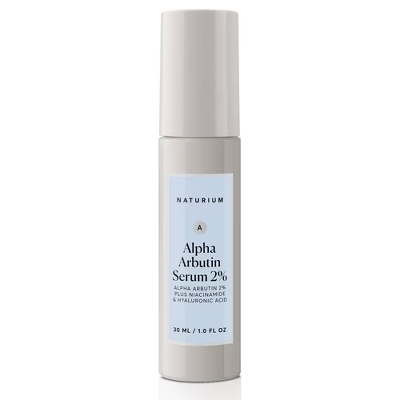
Alpha arbutin
A melanin-regulating ingredient that slows excess pigment production by inhibiting tyrosinase activity. Most clinical data comes from melasma studies, but the mechanism applies to post-inflammatory pigment as well. It’s typically well tolerated, which makes it a useful add-on for PIH when you want incremental brightening without increasing irritation risk.


Vitamin C (ascorbic acid)
An antioxidant that helps neutralize oxidative stress from UV exposure and inflammation, both of which can prolong post-acne discoloration. It also interferes with melanin formation and can modestly improve uneven tone over time, particularly for PIH. Results are most reliable when vitamin C is used consistently alongside daily sunscreen, since UV exposure can otherwise counteract its benefits.


Timeless Skin Care
Vitamin C Serum + Vitamin E & Ferulic Acid
AHAs (glycolic, lactic) and BHAs (salicylic)
Speed up shedding of pigmented cells and improve texture. Helpful for PIH when tolerated, but overuse can inflame skin and backfire. Use 2 to 3 nights weekly, not every night.


Hydroquinone
Evidence is strong, but in the US it is no longer legal for OTC sale and is generally prescription only.
PIE Leaning Ingredients (Red Marks)
Topicals are more limited here because the root issue is vascular remodeling. The most reliable at home approach is reducing ongoing irritation and inflammation while you prevent new acne.
Barrier builders (ceramides, panthenol, soothing occlusives)
Support the skin barrier so the mark is not repeatedly re inflamed by harsh routines, which can prolong visible redness. Useful when your skin stings easily or flakes around the marks.
✨ When marks won’t fade because your skin is reactive, this routine reset is the next move.


In office options that treat PIE faster
Vascular lasers and light devices target blood vessels directly and tend to outperform topicals for persistent PIE.
Treatment Plans
If you mostly have PIE (red marks)
Morning (AM)
- Cleanse (optional if you’re dry/sensitive)
- Azelaic acid (optional but helpful if you want one active in the morning)
- Moisturizer (barrier-supporting if you sting easily)
- Sunscreen every day (UV can keep inflammation lingering)
Night (PM)
- Cleanse
- Choose one core active:
retinoid (adapalene/retinol) or azelaic acid - Barrier moisturizer (ceramides/panthenol/soothing occlusives)
How to use azelaic acid + a retinoid without irritation
- If you want both, use retinoid at night and azelaic acid in the morning, or alternate nights (retinoid night, azelaic night).
- Start the retinoid 2–3 nights per week, then increase only if your skin stays comfortable.
When to consider in-office help
- If marks persist for months and are clearly red and blanch with pressure, a vascular laser/IPL consult is often the route.
If you mostly have PIH (brown marks)
Morning (AM)
- Cleanse (optional if you’re dry/sensitive)
- Pigment suppressor: choose one
tranexamic acid or alpha-arbutin or azelaic acid or vitamin C - Moisturizer
- Sunscreen every day (consider tinted if you’re pigment-prone)
Night (PM)
- Cleanse
- Turnover active: choose one
retinoid (adapalene/retinol) or an AHA (glycolic/lactic/mandelic) - Moisturizer (barrier support)
How to use both without irritation
- Most people do best with pigment suppressor in the morning and turnover active at night.
- If you’re sensitive, use the turnover active 2–3 nights per week at first and increase slowly.
Timeline
- Stay consistent for 8–12+ weeks before judging progress.
If you have both (most people do)
- Morning: tinted sunscreen + tranexamic acid or alpha arbutin
- Night: retinoid on most nights + azelaic acid on alternate nights if tolerated
How Long does it Take?
PIH: epidermal PIH often takes 6 to 12 months, and deeper dermal pigment can last years.
PIE: commonly lasts months and can persist longer, especially after deeper inflammatory acne.
If you are not seeing any change after ~12 weeks of consistent sunscreen plus a targeted active, the usual issues are ongoing acne, inconsistent sunscreen, or irritation from too many actives.
Clinically informed tips
- If you take photosensitizing meds (common examples include doxycycline or some diuretics), PIH often lingers longer unless sunscreen use is very consistent. Treat sunscreen like part of the treatment, not an optional step.
- If you are pregnant or trying to conceive, skip topical retinoids and prescription lighteners unless your prescriber okays them. Azelaic acid, niacinamide, and diligent sunscreen are considered the safer core trio to build around, but always discuss with your doctor.
When to see a professional
- Marks that are not flat (pitted, raised, or thickened) may be scarring, not PIE or PIH.
- Persistent, clearly red marks that blanch and have not improved over many months often respond best to vascular laser or IPL rather than more topicals.
- If you want hydroquinone in the US, it generally requires a prescription.
Key Takeaways
References
- Bae-Harboe YSC, Graber EM. Easy as PIE (Postinflammatory Erythema). J Clin Aesthet Dermatol. 2013.
- Davis EC, Callender VD. Postinflammatory Hyperpigmentation: A Review of the Epidemiology, Clinical Features, and Treatment Options in Skin of Color. J Clin Aesthet Dermatol. 2010.
- Merck Manual Professional Edition. Evaluation of the Dermatologic Patient.
- Geisler AN, et al. Visible Light Part II: Photoprotection against Visible Light-induced Skin Damage. Dermatol Ther (Heidelb). 2021.
- Shucheng H, et al. Effects of 15% Azelaic Acid Gel in the Management of Post-inflammatory Erythema and Post-inflammatory Hyperpigmentation in Acne Vulgaris. 2024.
- DermNet NZ. Postinflammatory hyperpigmentation. DermNet New Zealand Trust.
- Boo YC. Arbutin as a Skin Depigmenting Agent with Antimelanogenic and Antioxidant Properties. Antioxidants (Basel). 2021.


