
In recent years, skin cycling has emerged as a buzzworthy approach in the world of skincare, gaining attention for its gentle yet effective results. This method takes the guesswork out of nightly routines by introducing a structured schedule for active ingredients, encouraging healthier, more radiant skin over time. This article breaks down the essentials of skin cycling—what it is, how to get started, the science-backed benefits, and some product suggestions to support your journey.
This content is educational in nature and should not be used as a substitute for individualized medical advice.
Shop This post


This post may contain affiliate links. This means I may earn a small commission if you purchase a product through my link at no extra cost to you. All items are carefully curated by me and reflect my honest opinion.
Skin Cycling Explained
Skin cycling organizes your actives into a repeatable night schedule. You rotate between:
- Night 1: exfoliation (AHA/BHA/PHA)
- Night 2: retinoid (OTC retinol/retinal or prescription retinoids)
- Nights 3–4: recovery (barrier-supporting hydration + moisturizer)
Cycling improves tolerability, which improves consistency—that’s when you start seeing real change.

Who Skin Cycling Works Well For
Skin cycling tends to work best if you want results from actives but your skin gets reactive when you use them too often—dryness, stinging, flaking, or burning.
It’s also useful if you:
- start and stop retinoids because irritation derails you
- over-layer products and can’t tell what’s helping
- want a routine structure that’s easy to adjust
If you’re dealing with an active flare—eczema patches, an irritated/burning barrier, or areas that feel raw or cracked—hold off on skin cycling for now. Instead, start with a recovery routine for a week or two, then slowly reintroduce actives.
✨ Use this skin barrier guide as your 7–14 day reset.
The Science Behind Skin Cycling
Skin cycling as a “named method” hasn’t been studied as a standalone intervention. The logic is grounded in what we know about the ingredients involved:
- Chemical exfoliants (AHAs/BHAs/PHAs) loosen connections between dead cells, which can smooth texture and help with clogged pores and discoloration depending on the acid and strength.
- Retinoids influence cell turnover and are central in acne care; they also support smoother texture and more even tone when used consistently.
- Recovery nights help reduce cumulative irritation. Barrier-supportive moisturizers can measurably improve hydration and reduce transepidermal water loss (TEWL), a proxy for barrier function.
In practice, the schedule helps because it reduces “stacking” multiple irritating steps on the same night and gives the barrier time to stabilize.
Your Skin Cycling Schedule (Night by Night) + Best Products for Skin Cycling
Night 1 — Exfoliation night (smooth + unclog)
Purpose: refine rough texture, reduce congestion, and set you up for better tolerance of retinoids over time.
How to do it
- Cleanse → exfoliant → moisturizer
- Keep it to one exfoliant. Skip scrubs and cleansing brushes.
Choose one lane
- AHA (lactic/mandelic for gentler, glycolic for stronger): best for dullness, uneven texture, and post-acne discoloration—often a better fit for normal-to-dry skin than BHA
- BHA (salicylic acid): best for clogged pores, blackheads, oily/acne-prone skin
- PHA: best for sensitive, easily irritated, or dry skin that still wants gentle smoothing
Product options for Night 1
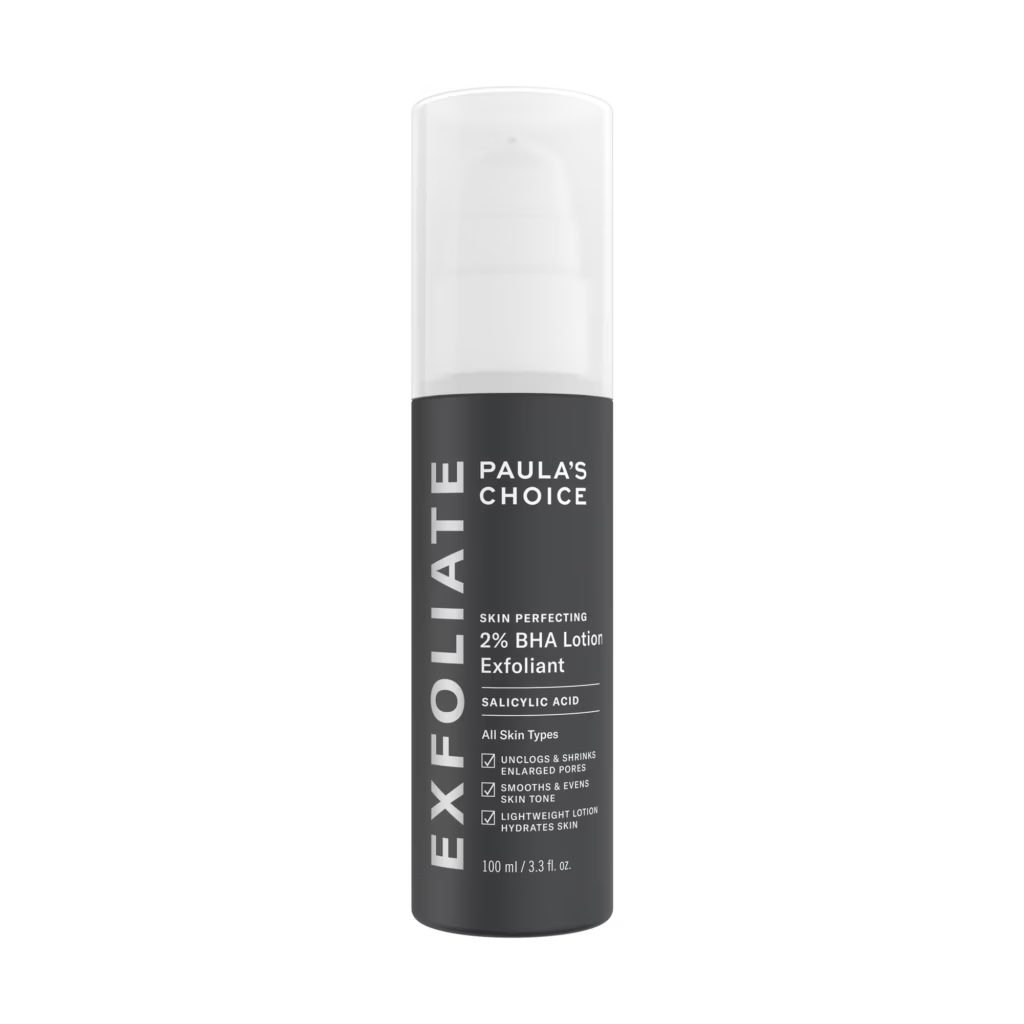
Paula’s Choice Skin Perfecting 2% BHA Liquid Exfoliant
A straightforward leave-on exfoliant built around 2% salicylic acid (BHA) for pore congestion and blackheads. The formula is simple and widely tolerated for an acid at this strength, which makes it easier to use consistently. Best suited for oily, combination, or acne-prone skin cycling routines. Expect a watery, quick-drying finish.
NEOSTRATA PHA Renewal Face Pads
A gentle, controlled exfoliation step using gluconolactone (PHA) in a pre-soaked pad, so dosing stays consistent. Best for normal, dry, or combination skin that wants smoother texture and less dullness. Often a good option for sensitive or easily irritated skin, because PHAs tend to exfoliate more gently than many AHAs and also have humectant-like properties.

The Ordinary Lactic Acid 5% + HA
A budget-friendly AHA option using 5% lactic acid plus hydrating support (hyaluronic acid). Lactic acid is often better tolerated than stronger glycolic formulas, especially at beginner concentrations. Best suited for dullness and mild uneven texture in normal-to-dry skin types. Expect a lightweight serum texture that layers easily under moisturizer. If you’re prone to flaking, use it every other cycle rather than every cycle.

Night 2 — Retinoid night (the long-game night)
Purpose: reduce breakouts over time, improve uneven tone, and support smoother texture and fine lines with consistent use.
How to do it
- Cleanse → (optional moisturizer “buffer”) → retinoid → moisturizer
- Use pea-sized amount for the whole face. More increases irritation, not results.
Product options for Night 2
Differin Adapalene Gel 0.1%
An evidence-supported OTC retinoid for acne built around 0.1% adapalene. It’s especially useful for comedones (clogged pores) and prevention, which makes it a strong “anchor” active for cycling. Best suited for acne-prone and combination/oily skin, including people who break out from heavier creams. Expect a light gel that dries down quickly. If you’re dry or easily irritated, apply moisturizer first (the “sandwich” method), then adapalene.

Avène RetrinAL 0.1 Intensive Multi-Corrective Cream
A higher-performance option built around 0.1% retinaldehyde (retinal) plus supportive ingredients (including niacinamide/hyaluronic acid). Retinal converts to active retinoic acid more directly than retinol, which can translate to stronger results with careful pacing. Best suited for texture, early lines, and uneven tone when you’re ready to level up. Expect a lightweight cream texture.

Naturium Retinaldehyde Cream Serum 0.05% (my personal favorite)
A well-formulated retinal option built around 0.05% retinaldehyde in a creamy serum base designed for gradual release and tolerability. It’s a strong pick for people who want retinal without jumping straight to the highest strengths. Best suited for combination skin, post-acne texture, and early discoloration. Expect a cushiony, cream-serum finish that pairs well with a simple moisturizer on top.

Nights 3–4 — Recovery nights (barrier + calm)
Purpose: restore hydration, reduce irritation signals, and keep your barrier resilient enough to tolerate the active nights.
How to do it
- Cleanse → hydrating serum (optional) → moisturizer → optional occlusive on dry spots
- This is where you keep the routine boring in the best way.
Product options for Nights 3–4
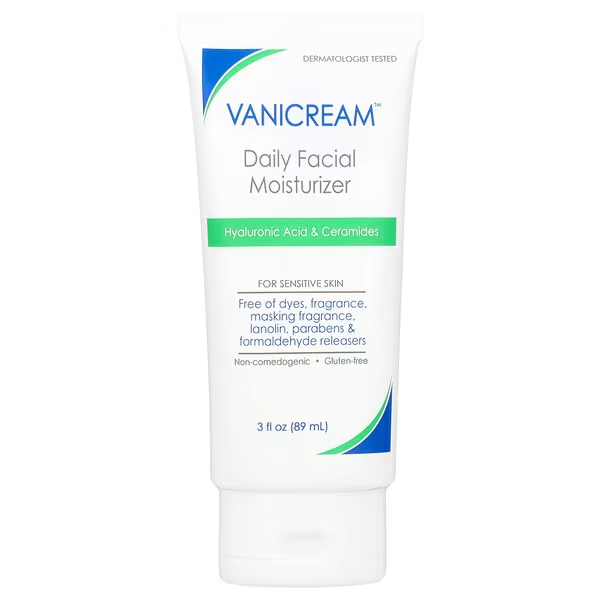
Vanicream Daily Facial Moisturizer
A low-drama moisturizer built around ceramides + humectants (like glycerin/hyaluronic acid) designed for sensitive skin. It’s reliably fragrance-free and minimal on common irritants, which matters when you’re cycling stronger actives. Best suited for normal, dry, sensitive, and acne-prone skin that still needs barrier support. Expect a lightweight lotion feel that layers well under sunscreen. If you’re peeling, use a slightly thicker layer at night and keep the morning layer thin.
ETUDE SoonJung 2x Intensive Cream
A sensitive-skin classic built around panthenol + madecassoside for soothing support. Best suited for dry, reactive, or over-exfoliated skin cycling beginners. Expect a richer cream texture with a soft finish. If you’re acne-prone, keep it to recovery nights only and use a lighter moisturizer on active nights.

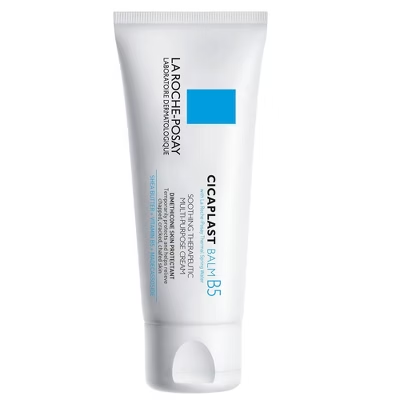
La Roche-Posay Cicaplast Baume B5
A barrier support balm built around panthenol (B5) and soothing agents that are commonly used for irritation-prone skin. It’s especially useful as a targeted layer on the corners of the nose, around the mouth, or anywhere your skin tends to crack during retinoid adjustment. Best suited for dry patches, irritation, and tightness on recovery nights. Expect a thicker balm feel that can look slightly dewy. If you’re very clog-prone, apply it only to the areas that need it rather than the full face.
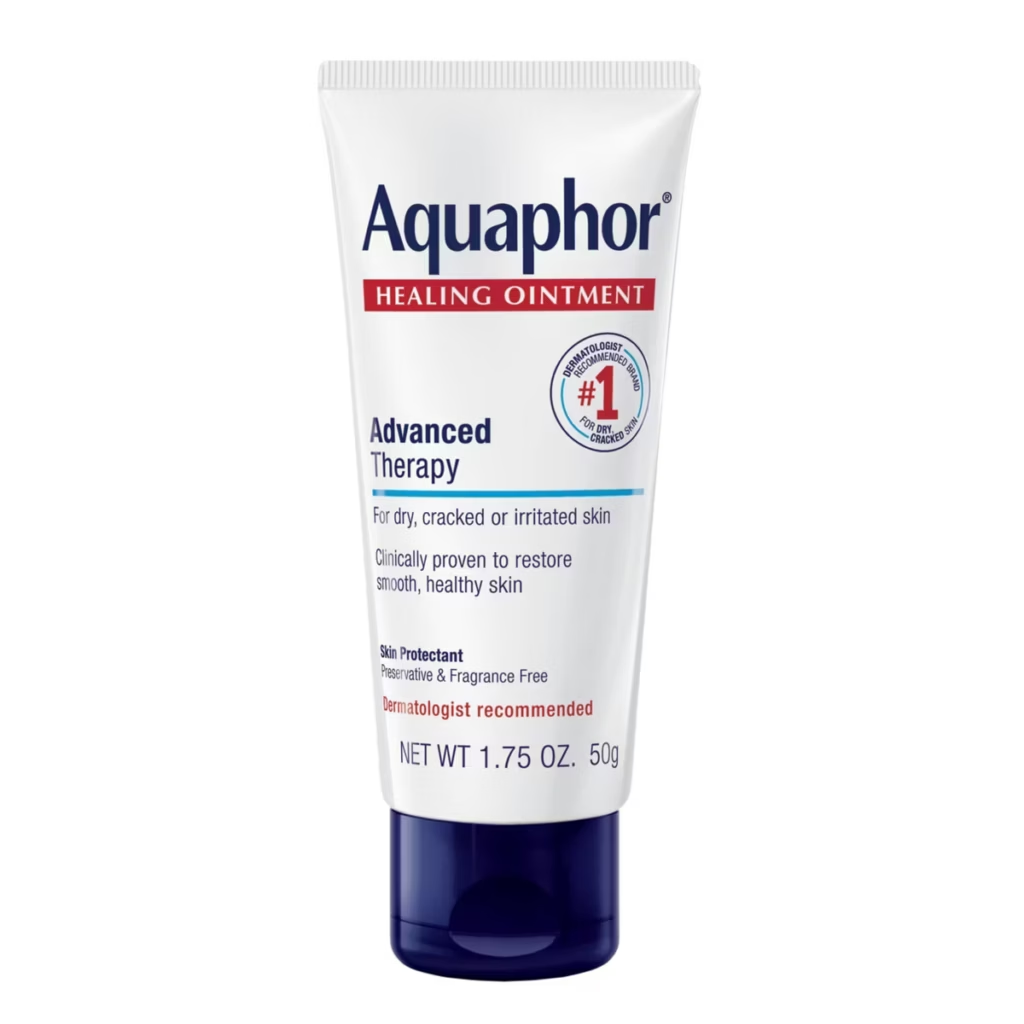
Aquaphor Healing Ointment
A classic occlusive that reduces water loss by forming a protective layer over moisturizer. This is a powerful tool for peeling zones during the first 4–8 weeks of retinoid use. Best suited for spot “slugging” (lips, under-eyes avoiding lash line, around the mouth, nostrils). Expect a shiny finish. Skip full-face use if you’re very acne-prone; keep it strategic.

Optional hydrating layer (Recovery nights or anytime you feel tight):
Isntree Hyaluronic Acid Toner
A light hydration step that layers well under thicker creams. Best for dry or dehydrated skin and for people who feel tight after cleansing.

How Long Does it Take to See Results?
A realistic timeline helps people stay consistent.
- 1–2 weeks: skin feels more hydrated and less tight if recovery nights are doing their job.
- 4–6 weeks: fewer new clogs for some acne-prone routines; texture starts to look smoother (varies a lot).
- 8–12 weeks: more reliable changes in breakouts, tone, and overall skin clarity—this is the time window most retinoid guidance leans on.
- 3–6 months: longer-term benefits like more even pigmentation and visible refinement in fine lines become more noticeable with steady use.
Common Questions
Can I skin cycle if I already use tretinoin?
Yes. Treat tretinoin as your Night 2 retinoid and keep Nights 3–4 very simple. Many people still benefit from one exfoliation night, though it’s optional—especially if tretinoin already gives you enough turnover.
Do I need two recovery nights?
If you’re sensitive, new to retinoids, or using stronger formulas, two recovery nights often prevents the slow creep into irritation. If your skin is very resilient, you may eventually move to a 3-night cycle (Exfoliation → Retinoid → Recovery), though I’d only do that once your skin has been calm for at least a month.
What about purging?
Retinoids can bring microclogs to the surface faster, which can look like a temporary breakout in your usual acne zones. If it spreads beyond your typical acne pattern or comes with ongoing burning/tenderness, assume its irritation rather than purging and pause or reduce your actives.
Where do benzoyl peroxide or vitamin C fit?
If you use them, keep them out of Nights 1–2 while you’re adjusting. Many people place benzoyl peroxide in the morning (wash or short-contact) and keep the cycling nights focused. Vitamin C usually sits best in the morning, separate from retinoid night.
What if products pill?
Pilling usually comes from layering too many textures or applying on damp skin. Let each layer set for a minute, and keep active nights to one treatment plus moisturizer.
Safety Notes and When to See a Professional
- Pregnancy / trying to conceive: topical retinoids are generally avoided as a precaution, even though absorption is low.
- If you get burning, swelling, crusting, or persistent raw patches, pause actives and focus on bland recovery for several days.
- If you have cystic acne, widespread scarring, or acne that’s impacting your mental health, it’s worth seeing a dermatologist sooner rather than trying to out-routine it.
Key Takeaways
References
[1] Motamedi M, Chehade A, Sanghera R, Grewal PS. A Clinician’s Guide to Topical Retinoids. Journal of Cutaneous Medicine and Surgery. 2022.
[2] Reynolds RV, et al. Guidelines of care for the management of acne vulgaris. Journal of the American Academy of Dermatology (JAAD). 2024.
[3] Sitohang IBS, Makes WI, et al. Topical tretinoin for treating photoaging: A systematic review of randomized controlled trials. International Journal of Women’s Dermatology. 2022.
[4] Almeman AA. Evaluating the Efficacy and Safety of Alpha-Hydroxy Acids in Dermatological Practice: A Comprehensive Clinical and Legal Review. Clinical, Cosmetic and Investigational Dermatology. 2024.
[5] Spada F, Barnes TM, Greive KA. Skin hydration is significantly increased by a cream formulated to mimic the skin’s own natural moisturizing systems. Clinical, Cosmetic and Investigational Dermatology. 2018.
[6] Green M, et al. Transepidermal water loss (TEWL): Environment and pollution… International Journal of Women’s Dermatology. 2022.


