
Double cleansing is a two-step nighttime cleanse that pairs oil-based cleansing first with a water-based cleanser second. The steps are complementary: oil helps dissolve and lift oil-loving buildup like sunscreen, makeup, and excess sebum, then a gentle water-based cleanser rinses away the loosened residue so skin is clean without extra rubbing. This method is often the most efficient way to fully cleanse without leaving skin feeling tight afterward.
This content is educational in nature and should not be used as a substitute for individualized medical advice.
Shop This post


This post may contain affiliate links. This means I may earn a small commission if you purchase a product through my link at no extra cost to you. All items are carefully curated by me and reflect my honest opinion.
Do You Actually Need To Double Cleanse?
You are a good candidate for double cleansing if you regularly
- Wear water-resistant or high-adherence sunscreen (especially face + neck reapplication)
- Wear long-wear foundation, tubing mascara, waterproof makeup
- Use heavy occlusives at night (balms, slugging) or you use hair oils that migrate to the face
- Have very oily skin and you feel like you need to “over-cleanse” to feel clean (double cleansing can let you use gentler products, with less rubbing)
You can usually skip double cleansing if
- You wear little to no makeup and your sunscreen is not water-resistant
- Your skin is dry, reactive, eczema-prone, or barrier-impaired, and cleansing twice tends to leave you tight or irritated
- It is morning and you did a solid cleanse the night before (most people do not need a two-step cleanse twice daily)
What Double Cleansing Does and Why It Works
Double cleansing works because it uses two cleanser systems in sequence: the first targets oil-soluble films, and the second removes the emulsified leftovers. Done correctly, it gets skin fully clean with less rubbing and less need for harsher cleansing.
Step 1: Oil-based cleanse
Oil cleansers and balms lift oil-loving films on the skin, including sunscreen, silicone-heavy makeup, and excess sebum. The key is emulsification: when you add water, a well-formulated oil cleanser turns milky and rinses away cleanly, which helps you avoid repeated scrubbing.
In a clinical study on sunscreen removal, a cleansing oil removed water-resistant sunscreen more effectively than water alone or a foaming cleanser, and participants reported less dryness with the cleansing oil than with the foaming cleanser.
Step 2: Water-based cleanse
A gentle water-based cleanser clears what step 1 loosened and rinsed, plus anything water-friendly that oil does not fully address. Think of it as the step that prevents leftover residue from hanging around on the skin.
It helps remove:
- leftover emulsified residue from step 1
- sweat and salt
- particulate grime and anything that did not budge in step 1

Double Cleansing Without Irritation
Double cleansing can be helpful, but it can also become over-cleansing if you stack:
- Two long cleansing steps
- Hot water
- Aggressive rubbing or cleansing brushes
- Multiple potentially irritating actives in the same routine (acids, retinoids, benzoyl peroxide)
Dermatology guidance on basic face washing is very consistent: use lukewarm water, fingertips, avoid scrubbing, and pat dry. Also, longer water exposure and hotter water can worsen barrier disruption.
Clinical Tip
If you are on topical retinoids, benzoyl peroxide, or oral isotretinoin, your irritation threshold is lower. Consider one gentle cleanse most nights, and save double cleansing for heavy sunscreen or makeup days to reduce cumulative barrier stress.
How to Double Cleanse Correctly
Step 1: Oil cleanser or cleansing balm (30 to 60 seconds)
- Start with dry hands + dry face.
- Massage gently for 30 to 60 seconds (shorter if sensitive).
- Add water slowly until it turns milky.
- Rinse thoroughly.
Avoid: harsh eye rubbing. If you wear waterproof mascara daily, consider a separate eye makeup remover step with a soft pad.
Step 2: Water-based cleanser (30 to 60 seconds)
- Apply cleanser to damp skin.
- Gentle massage for 30 to 60 seconds (or 20–30 if you run dry/reactive).
- Rinse with lukewarm water and pat dry.
Then: moisturize
If you feel even mildly tight after cleansing, moisturize immediately. Barrier support becomes more important when you’re cleansing more often.
Choosing the Right Products: What to Look For
A good first cleanser (oil or balm) usually has
- an emulsifier so it rinses cleanly
- minimal fragrance if you are sensitive
- no gritty particles and no harsh scrubs
A good second cleanser usually has
- mild surfactants (often labeled gentle, hydrating, sensitive)
- minimal fragrance and fewer known irritants for reactive skin
- a finish that matches your skin type (creamier for dry, gel for oily)
Product Recommendations
Best First Cleanse Options (Oil cleansers, Balms)
DHC Deep Cleansing Oil — oil cleanser
- Key ingredients: olive oil base; tocopherol; rosemary leaf oil (aromatic)
- Formula notes: classic emulsifying oil; strong at waterproof makeup/SPF removal; rosemary oil can be a dealbreaker if you avoid scent
- Best for: makeup + water-resistant SPF days; normal to dry; combo skin that prefers an oil that rinses clean
- Texture/finish: thin oil; milky emulsification; clean rinse when fully emulsified

Clinique Take The Day Off Cleansing Balm — cleansing balm
- Key ingredients: safflower seed oil; caprylic/capric triglyceride; tocopherol
- Formula notes: ultra-short ingredient list; 100% fragrance-free
- Best for: sensitive skin/eyes; heavy base makeup; anyone avoiding fragrance/essential oils
- Texture/finish: firm balm → silky oil; rinses clean with thorough emulsification

CeraVe Makeup Removing Cleanser Balm — cleansing balm
- Key ingredients: ceramides + cholesterol + phytosphingosine; jojoba oil; tocopherol
- Formula notes: barrier-lipid focus you do not see in most balms; fragrance-free; built to rinse without that heavy balm film
- Best for: dry/sensitive or over-cleansed skin; also fine for oily/acne-prone when you always do a true second cleanse
- Texture/finish: firm balm → light oil; milky rinse; soft, non-squeaky feel

The Ordinary Squalane Cleanser — balm-to-oil cleanser
- Key ingredients: squalane + glycerin; sucrose-based esters
- Formula notes: warms into an oil in your hands; has National Eczema Association Seal of Acceptance
- Best for: dry/dehydrated or sensitive-leaning routines; great on light-to-moderate makeup and daily SPF
- Texture/finish: cream-balm → clear oil; soft, comfortable rinse (not squeaky)

Beauty of Joseon Radiance Cleansing Balm — cleansing balm
- Key ingredients: rice bran water + oil; grain complex extracts; soybean oil + ginseng seed oil
- Formula notes: fragrance/essential-oil–free; K-beauty balm that leans more cushiony and moisturizing than stripped-clean
- Best for: normal to dry; sensitive-leaning; daily sunscreen wearers who want a softer post-rinse feel
- Texture/finish: plush balm; balm → oil → milky rinse when fully emulsified

Anua Heartleaf Pore Control Cleansing Oil — oil cleanser
- Key ingredients: heartleaf extract; butyl avocadate; mix of plant oils (sunflower, jojoba, grape, etc.)
- Formula notes: lightweight ester-heavy base for a less heavy feel; contains fragrance (important if you are reactive)
- Best for: normal to combo (including oily) with visible sebum + sunscreen reapplication; skip if fragrance triggers you
- Texture/finish: thin oil; fast emulsification; cleaner rinse when you fully emulsify with water

Best Second Cleanse Options (Water-Based Cleansers)
CeraVe Hydrating Facial Cleanser — non-foaming cleanser
- Key ingredients: ceramides + hyaluronic acid + glycerin
- Formula notes: non-foaming, barrier-leaning cleanser; National Eczema Association certified
- Best for: normal to dry; sensitive-leaning; post-retinoid dryness
- Texture/finish: lotion-cream slip; soft rinse; no squeaky feel

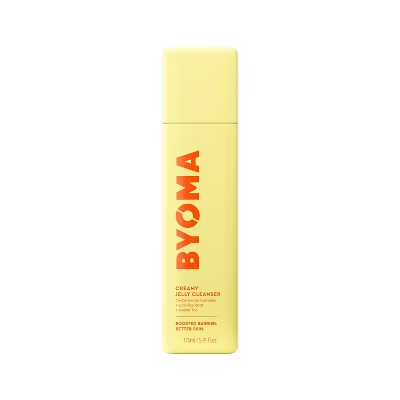
BYOMA Creamy Jelly Cleanser — gel cleanser
- Key ingredients: Tri-Ceramide Complex (ceramides + cholesterol + fatty acids) + licorice root + green tea
- Formula notes: jelly texture that lathers creamy; barrier-lipid positioning; pH balanced
- Best for: combo skin that dehydrates easily; barrier-focused routines that still want a clean rinse
- Texture/finish: jelly-gel → creamy lather; rinses clean without tightness
Naturium Niacinamide Cleansing Gelée 3% — gel cleanser
- Key ingredients: niacinamide 3% + glycerin + hyaluronic acid + sodium ascorbyl phosphate
- Formula notes: gentle surfactant blend; fragrance/essential-oil–free positioning; “treatment-adjacent” cleanser for tone/oil concerns
- Best for: oily to combo; dullness + shine; people who want niacinamide without adding another leave-on step
- Texture/finish: bouncy gel; light lather; very clean rinse feel

Youth To The People Superfood Cleanser — gel cleanser
- Key ingredients: kale + spinach + green tea + vitamins C/E (superfoods blend)
- Formula notes: sulfate-free; botanical-heavy; naturally fresh/herbaceous scent profile
- Best for: normal to oily; sweat + sunscreen; people who like a fresher cleanse sensation
- Texture/finish: gel with light foam; crisp rinse that can feel a bit too “clean” for very dry skin

La Roche-Posay Toleriane Moisturizing Milky Cleanser
- Key ingredients: glycerin, ceramide-3, niacinamide, La Roche-Posay thermal spring water
- Formula notes: milky, non-stripping cleanser that supports the skin barrier while removing leftover residue after an oil cleanse
- Best for: dry, sensitive, allergy-prone, or barrier-impaired skin
- Texture/finish: lightweight milk; rinses clean while leaving skin soft and comfortable

ETUDE SoonJung pH 6.5 Whip Cleanser — pre-foamed whip
- Key ingredients: panthenol + madecassoside (+ glycerin support)
- Formula notes: pre-foamed micro-bubbles to reduce friction; low-pH positioning; fragrance/essential-oil–free
- Best for: sensitive, redness-prone; retinoid users who still prefer foam; low effort + low rubbing
- Texture/finish: dense whip foam; fast rinse; clean but gentle feel

KraveBeauty Matcha Hemp Hydrating Cleanser — gel cleanser
- Key ingredients: matcha + hemp seed oil + high-glycerin formula (brand highlights 15% glycerin)
- Formula notes: fragrance/essential-oil–free positioning; designed to cleanse while leaving skin comfortable (not tight)
- Best for: dehydrated combo; dry/sensitive
- Texture/finish: bouncy gel; silky lather; hydrated finish without residue

FAQ: Double Cleansing
Is double cleansing necessary every night?
No. It is a tool for heavy sunscreen and makeup days. If your skin feels comfortable and clean with one gentle cleanser, that is enough.
Can I use micellar water as the first cleanse?
Yes, especially for sensitive skin or light makeup. Many people find micellar water removes makeup with less rubbing, and you can rinse or follow with a gentle cleanser if you prefer.
Do I need double cleansing if I only wear sunscreen?
Sometimes. If the sunscreen is water-resistant or layered, a first cleanse can help reduce rubbing and improve removal. Cleansing oil performed very well for water-resistant sunscreen removal in a clinical trial.
Does double cleansing make pores smaller?
No. It can help remove buildup that makes pores look more noticeable, but it does not change pore structure.
Will double cleansing cause breakouts?
It can if you over-cleanse, rub aggressively, or pick a fragranced first cleanser that irritates you. Over-cleansing can compromise barrier function and increase irritation risk.
Should I double cleanse in the morning?
Usually no. Morning cleansing can be a single gentle cleanse or water rinse depending on your skin and routine. Basic dermatology face washing guidance emphasizes gentleness and avoiding irritation.
Key Takeaways
References
- American Academy of Dermatology. Face washing 101. AAD.
- Mijaljica D, et al. Skin Cleansing without or with Compromise: Soaps and Syndets. Clin Cosmet Investig Dermatol. 2022.
- Presley CL, et al. The History of Surfactants and Review of Their Allergic and Irritant Properties. Dermatitis. 2021.
- Chen W, et al. The optimal cleansing method for the removal of sunscreen: Water, cleanser or cleansing oil? J Cosmet Dermatol. 2020.
- American Academy of Dermatology. Skin care for acne-prone skin. AAD.
- Herrero-Fernandez M, et al. Impact of Water Exposure and Temperature Changes on Skin Barrier Function. 2022.
- Mukhopadhyay P. Cleansers and their role in various dermatological disorders. Indian J Dermatol. 2011.


