
If you’ve tried “clear skin in 7 days” routines and ended up red, flaky, or even more broken out… you’re not alone.
Clear skin is possible for most people, but it usually comes from:
- A very boring, consistent routine
- 1–2 well-chosen active ingredients
- Protecting your skin barrier (and your mental health) along the way
This content is educational in nature and should not be used as a substitute for individualized medical advice.
Shop this post




This post may contain affiliate links. This means I may earn a small commission if you purchase a product through my link at no extra cost to you. All items are carefully curated by me and reflect my honest opinion.
What “Clear Skin” Actually Means
Clinically, “clear” skin does not mean:
- Zero pores
- Zero texture
- Zero breakouts ever again
Instead, it usually means:
- Minimal active breakouts most of the time
- Occasional spots that calm quicker and scar less
- Lingering marks that steadily fade over months
- A comfortable, intact skin barrier
Genetics, hormones, and chronic conditions (like PCOS) play a huge role. Over-the-counter skincare can do a lot, but some people will need prescription treatments (like spironolactone, oral antibiotics, or isotretinoin) to get fully clear—that’s completely normal.
Build a Gentle Base Routine
Before you consider layering actives, you need a calm, consistent base routine. This alone can reduce breakouts for many people.
Morning
- Gentle cleanser (or just a water rinse if very dry/sensitive)
- Normal to dry / sensitive: La Roche-Posay Toleriane Hydrating Gentle Cleanser – creamy, non-foaming, supports the barrier.
- Normal to oily / acne-prone: CeraVe Foaming Facial Cleanser – removes oil and sunscreen without that “stripped” feeling.
- Very sensitive / eczema-prone: Vanicream Gentle Facial Cleanser – ultra-gentle, soap- and fragrance-free.
- Lightweight, non-comedogenic moisturizer
- Normal to oily/combination: CeraVe PM Facial Moisturizing Lotion – lightweight, oil-free, with ceramides and niacinamide.
- Dry or reactive / compromised barrier: Vanicream Moisturizing Cream – simple, rich, and free of common irritants.
- Broad-spectrum SPF 30+ every single morning
- Acne-prone or redness-prone: EltaMD UV Clear SPF 46 – lightweight, oil-free, with niacinamide and transparent zinc oxide.
- Normal to combination / minimalist: La Roche-Posay Toleriane Double Repair UV Moisturizer SPF 30 – moisturizer + sunscreen hybrid.
✨ Wearing sunscreen or makeup daily? Learn how to double cleanse without stripping your barrier.
Why SPF is non-negotiable:
UV exposure keeps post-acne marks “re-stimulated” and worsens redness and aging. Sunscreen is just as important as actives if you want clear, even-toned skin.
Evening
- Gentle cleanser
- Use the same cleanser you used in the morning (La Roche-Posay, CeraVe, or Vanicream depending on your skin).
- Moisturize
- Use your CeraVe PM or Vanicream cream.
- No actives yet
- Stick with this simple routine for 2–4 weeks.
- Often, just removing harsh scrubs and drying toners and switching to gentle basics will quietly reduce breakouts and irritation.
Once your skin feels calmer (less burning, less flaking), you’re ready for the next step.
Choose ONE Main Active
Acne breaks out because of four main factors working together: extra oil, clogged pores, bacteria, and inflammation. Different actives target different pieces of that puzzle.
Here’s a simple guide:
| Your main issue | Best first active | Recommended Product | How it Helps |
|---|---|---|---|
| Red, inflamed pimples | Benzoyl peroxide | PanOxyl 4% wash* | Kills acne bacteria and calms inflammation. |
| Blackheads, clogged pores, “bumps” | Salicylic acid (BHA) | Paula’s Choice 2% BHA | Oil-soluble acid that unclogs pores and smooths texture. |
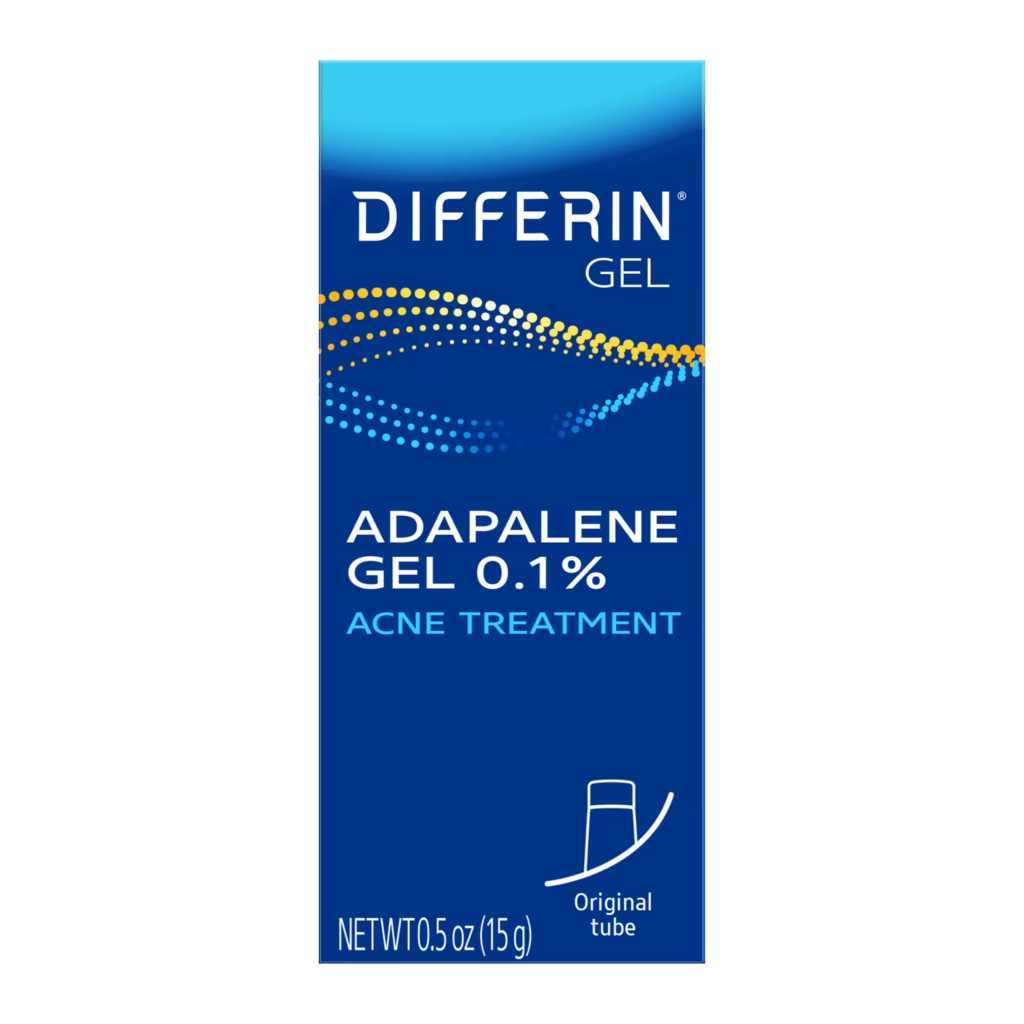
| Frequent breakouts + texture | Adapalene 0.1% (retinoid) | Differin Gel | Normalizes how cells shed inside pores and reduces inflammation. |
| Acne + redness + dark marks | Azelaic acid | The Ordinary Azelaic Acid 10% | Antibacterial, anti-inflammatory, and reduces excess pigment production. |
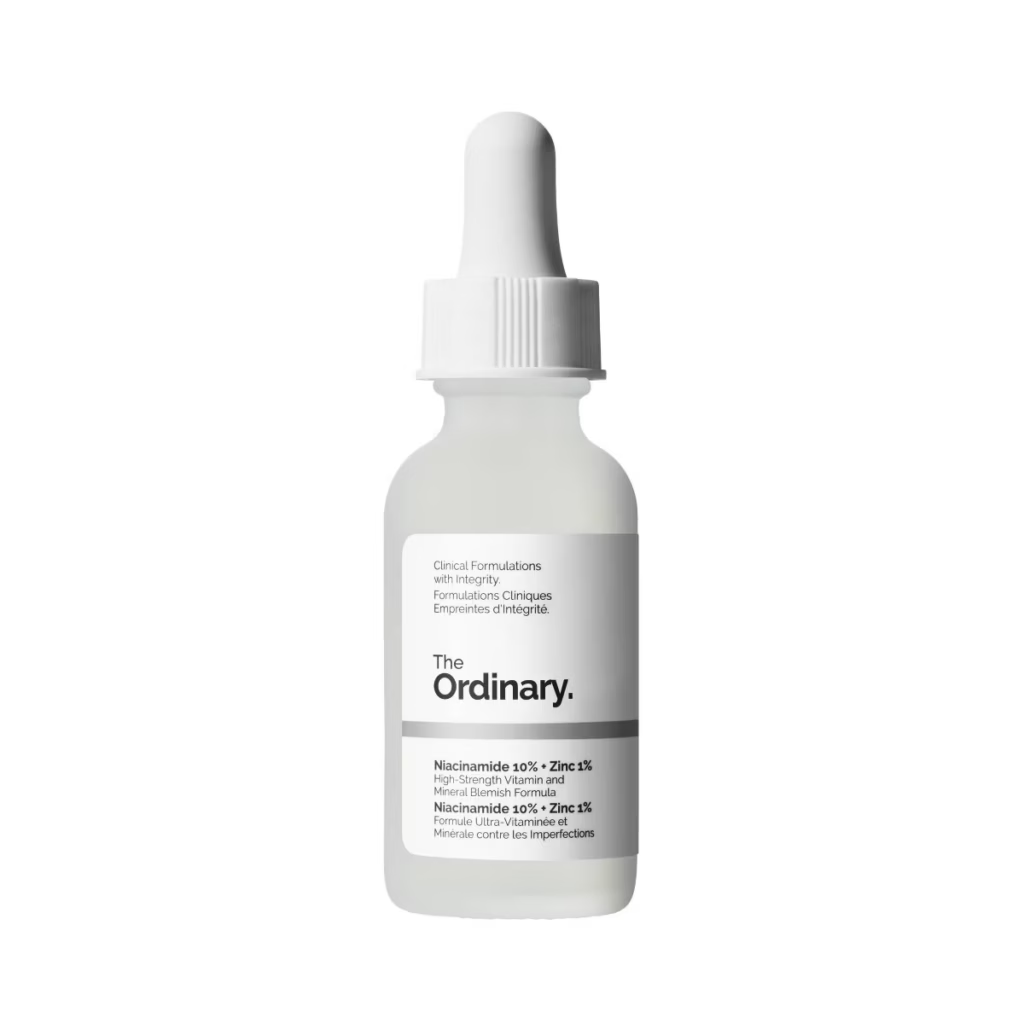
| Oily, easily irritated skin | Niacinamide | The Ordinary Niacinamide 10% + Zinc 1% | Can reduce sebum output, calm redness, and support the barrier. |
How to Introduce an Active (Without Destroying Your Barrier)
- Start every 3rd night (e.g., Monday, Thursday, Sunday).
- If your skin is sensitive, use the “moisturizer sandwich”:
- Cleanse → thin layer of moisturizer → pea-sized active → another thin layer of moisturizer.
- If you develop intense burning, redness, or peeling:
- Reduce how often you use it, use a smaller amount, or pause for a week and focus on just cleanser + moisturizer.
- Most people need 8–12 weeks of consistent use (especially with retinoids) before deciding whether an active truly works.
Clinically informed tip:
Treat PanOxyl 4% as a short-contact medicated step:
- Cleanse first with your gentle cleanser, then rinse.
- Apply a small amount of PanOxyl 4% to damp skin, lather gently.
- Leave on for about 1–2 minutes (sensitive skin can start at 30–60 seconds).
- Rinse thoroughly, pat dry, and follow with moisturizer.
This gives BPO enough time to work on bacteria and clogs without wrecking your barrier.
Example Routines by Skin Type
These routines use only products we’ve already talked about. Think of them as templates you can tweak.
Lifestyle, Safety & When to See a Professional
Diet, Stress & Picking
Diet is not the sole cause of acne, but research suggests:
- High glycemic index/load diets (lots of sugary drinks, white bread, ultra-processed snacks) are associated with more acne.
- Dairy intake, particularly milk, may be linked to acne in some people, though evidence is mixed and not definitively causal.
Practical approach (no crash diets):
- Pattern your eating roughly around a lower-glycemic, balanced diet (proteins, fiber, healthy fats) if you suspect food triggers.
- Notice patterns between breakouts and specific foods, rather than cutting everything at once.
Other big players:
- Chronic stress and poor sleep can worsen inflammation and hormonal fluctuations.
- Picking/squeezing drastically increases risk of scarring and dark marks.
- Occlusion (tight helmets, masks, heavy comedogenic makeup or hair products) can cause “mechanical” acne.
When to Pause or Adjust Your Routine
Dial back actives and focus on cleanser + moisturizer only if:
- Your face is burning or stinging with gentle products.
- You have intense redness, flaking, or cracking.
- Breakouts suddenly worsen after adding a new product.
Then, reintroduce one active at a time, at a lower frequency.
When to See a Derm or Prescriber
Please seek in-person care if:
- You have deep, painful nodules or cysts, or you’re noticing early scars.
- Your acne is causing depression, anxiety, or social withdrawal.
- Over-the-counter routines haven’t helped after 3–4 months of consistent use.
- You’re pregnant or trying to conceive and want to treat acne (retinoids are usually avoided; BPO and azelaic acid are often used but still deserve professional guidance).
- You’re on medications that can worsen acne (e.g., some steroids, lithium, certain progestin-only contraceptives) and are concerned—talk to your prescriber about alternatives.
Seek urgent help if you develop:
- Severe burning, swelling, hives, or blistering from a product, or
- Sudden full-face swelling or trouble breathing (possible serious allergy).
Key Takeaways
References
- Reynolds RV, et al. Guidelines of care for the management of acne vulgaris. Journal of the American Academy of Dermatology. 2024.
- American Academy of Dermatology. Acne: Clinical guidelines and patient information. 2024.
- Cunliffe WJ, et al. Randomised, controlled trial of the efficacy and safety of adapalene gel 0.1% vs tretinoin 0.05% cream in acne vulgaris. British Journal of Dermatology. 2002.
- Althwanay A, et al. Efficacy of topical treatments in mild to moderate acne vulgaris: a systematic review. Dermatologic Therapy. 2024.
- Draelos ZD. The effect of 2% niacinamide on facial sebum production. Journal of Cosmetic and Laser Therapy. 2006.
- HCPLive. Topical azelaic acid effective for treatment of acne, melasma, rosacea. 2023.
- Meixiong J, et al. Diet and acne: A systematic review. JAAD International. 2022.


